This article is my last contribution to the paper, since I will be graduating this year, and keeping in line with many of my articles, this too will focus on music and our campus ensembles. As I prepare to step away, it feels fitting to end with a reflection on the music that will guide us through our final moments as students. This music will be performed by the groups that I have been a part of for the last four years and have written so much about. Commencement is filled with tradition, and even though a lot has changed, much of that tradition lives on in the music that surrounds us as we walk together one last time. This article is not to comment on the changes of tradition; rather, it is a commentary on the traditions that will remain.
Those attending the ceremony can expect a program rich with familiar sounds. The band will perform both the processional and the recessional, and the choir will perform the central piece to the college, the Alma Mater.
Almost everyone will recognize the processional, “Pomp and Circumstance” by Sir Edward Elgar. Elgar, who lived from 1857 to 1934, was an English composer whose work earned international acclaim. Although he is often associated with British musical tradition, many of his influences came from continental Europe. Few people realize that “Pomp and Circumstance” is not a single piece but a collection of marches, each written in a different key. Graduations typically feature selections from March Number One. Its steady and repetitive structure allows the music to stretch as long as needed while graduates make their way into the venue. Many musicians make a game out of guessing how many repetitions will be needed at each ceremony. For this ceremony, the band will perform the arrangement by Clare Grundman, a respected American composer and arranger known for shaping the sound of modern wind band literature.
The recessional will be “Brighton Beach” by William P. Latham. Latham, who lived from 1917 to 2004, was an American composer who wrote more than one hundred works for concert band. “Brighton Beach” was his first composition for that ensemble. The piece reflects his experiences during the Second World War. Although he was a skilled trumpet player who had served in a military band, Latham requested to fight in active combat rather than stay in the military band. The style of “Brighton Beach” reveals the influence of British marches, a musical style that he encountered during his time in Europe. It is a bright and confident piece, and it often feels like a musical expression of stepping forward into something new.
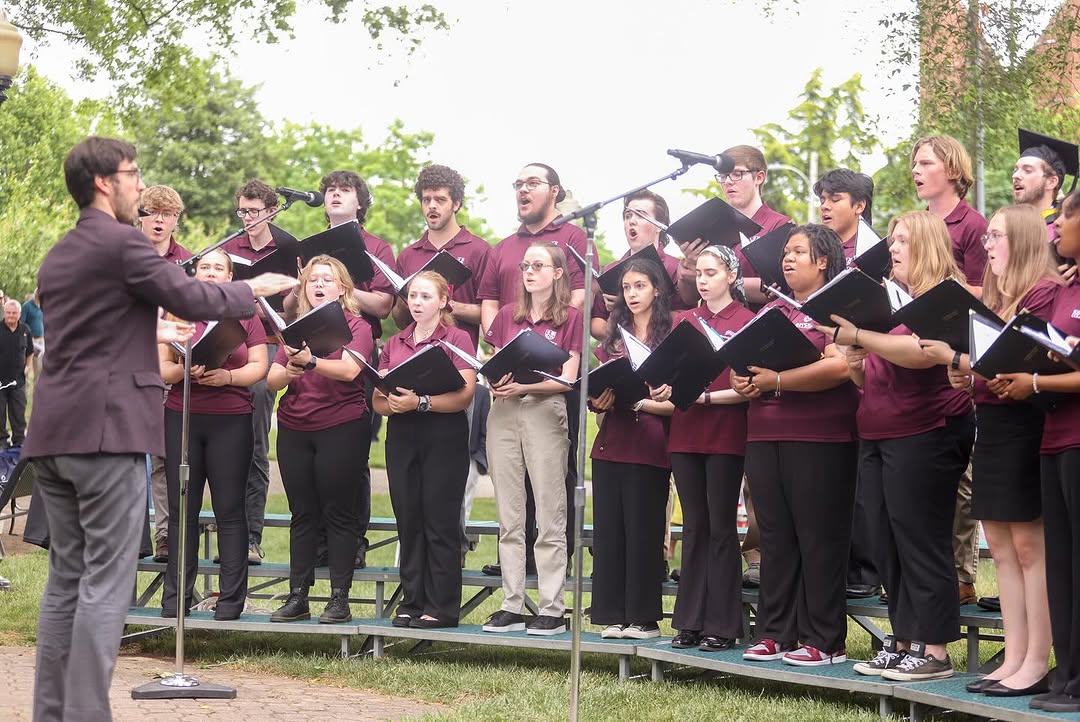
The choir will also perform during the ceremony. After the graduates are called individually to cross the stage and before the benediction by Chaplain Chris, the choir will lead the Alma Mater. The Alma Mater was composed in 1960 by Dr. Frank M. Williams. It remains a central part of major campus ceremonies, including commencement and convocation, and it is often featured in regular concerts as well. Audience members are invited to sing when prompted. The lyrics are printed in the program so that everyone can participate. There is something powerful about hearing hundreds of voices join together, especially at a moment when so many paths are about to diverge.
As I think about this final ceremony, I am struck by how much these musical traditions hold us together. They are the soundtrack of endings and beginnings, of pride and anticipation. They remind us that we are part of something larger than ourselves, something that continues long after we leave. It may seem like everything else relating to the ceremony has changed, but the music stays constant.
To my fellow graduates, congratulations. May the music of this day stay with you as you step into the next chapter of your life.
Kathryn McElfresh
Staff Reporter