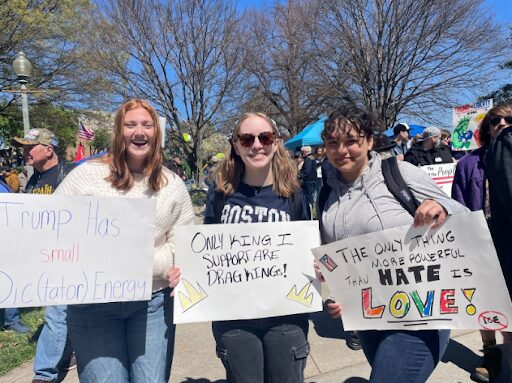

The past few weeks have been a particularly grim time for our country. Unfortunately, that is not the first time I have put forth that sentiment in an article here, and, despite my hopes, it is doubtful it will be the last time.
Moments like these test our hopes. Particularly amongst college students, who are often too young to feel they hold meaningful power in situations such as these. While students have felt hopelessness this week, I have spoken before about my belief in the power of education in these situations before, and turned towards that again this week. I was struck by one particular excerpt from Mariame Kaba, an activist and organizer, and the author of “We Do This ‘Til We Free Us”.
The excerpt is entitled “Hope Is A Discipline”, and explores Kaba’s own perspective on hope in her life as well as her perspective on collective care. Kaba’s practice of hope is inspired by models of faith which warn against “living in the afterlife”. The temptation with hope, often, can be to hold hope so as to remove yourself from struggle and place yourself already on the other side of dark times. That is, it can be easy to look for hope when looking for escape.
This week I was also struck by a trend in posts I saw. I saw multiple people speaking of how ridiculous it felt to scroll social media, or watch TV, or even go to work in this climate. And while that feeling is difficult to manage, I am trying to see in it a small piece of hope.
Kaba tells us that hope is not an emotion. It is something grounded and in the world; something you must actively practice and learn. I would apply a similar statement to distraction. In the past years, it has been easy to run to distractions such as social media or busy work. But distraction is a discipline that is learned the more it is practiced. I think one of the many confusions between the two is that they can have a similar effect: relief.
In this, I would argue distraction is a cheap solution. Any relief provided by distraction is brief and surface-level. It doesn’t solve problems or provide solutions. We end up stuck, coming back again and again when our lives and our world aren’t transformed by it.
Hope, on the other hand, is harder. Hope can take years to provide you with any relief, but is built on the belief that lasting and meaningful relief is possible, even and especially when it seems improbable. Hope is the precursor to action.
Kaba says, “[the] thing I’m doing is actually pretty insignificant in world history, but if it’s significant to one or two people, I feel good about that. If I’m making my stand in the world and that benefits my particular community of people, the people I designate as my community, and I see them benefiting by my labor, I feel good about that. That actually is enough for me. […] Your timeline is not the timeline on which movements occur. Your timeline is incidental. Your timeline is only for yourself to mark your growth and your living”.
Kaba expands upon this idea of helping the community in another section on collectivized care, saying that she doesn’t believe in self-care. She warns against it removing us from the world, similar to her warnings against “living in the afterlife”. According to Kaba, “all this internalized reflection is not good for people. Yes, think about yourself, reflect on your practice, okay. But then you need to test it in the world; you’ve got to be with people. That’s important.”
So I am trying to practice finding hope in the hopelessness and unrest and despair of this week. Despite the discomfort, I hope more people feel uncomfortable turning inward towards their distractions to defend themselves from the grief of this week.
And, more importantly, I am trying to let that hope lead me to action within my community. In hope of helping you do the same, please look to the article in this section entitled “How To Contact Your Representatives”.
Maggie Raker
Opinion Editor