Free Expression for Professors in Higher Education
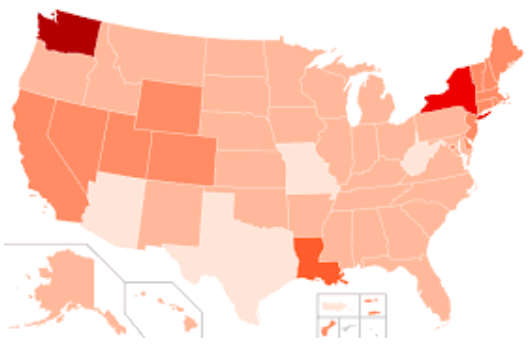
Did you know that educational regulations on topics like race, sex, and gender can differ widely across states? These regulations mostly affect the K-12 curriculum, but a recent PEN America report stated that state legislatures have passed over 70 bills and policies that place regulations on higher education curricula in 26 states. Two professors in Texas and Indiana have been fired for teaching certain topics about white supremacy and gender fluidity, the New York Times reported.
The incident at Texas A&M University occurred this past September after Professor Melissa McCoul’s lecture was recorded and posted online. She had assigned her literature class to read a children’s book with a gender-fluid character. The video posted online showed a student’s argument with McCoul over the legality of teaching gender fluidity. Having taught this class the same way for many years, McCoul decided to take legal action against what she believed was unjust termination. The New York Times article stated that McCoul and other public university professors are worried about the Trump administration’s increasing involvement in free expression in higher education.
Another case occurred at Indiana University, where Professor Jessica Adams was teaching a class titled “Diversity, Human Rights, and Social Justice.” One of Adams’ students filed a complaint against one of her lectures to Republican Senator Jim Banks, the New York Times reported. The student complained that Ms. Adams listed “Make America Great Again” on a graphic about white supremacy. Although Ms. Adams claimed that the student misinterpreted the message of her lecture, Indiana University removed the professor from the classroom in the name of sustaining “intellectual diversity.”
Even though it was ultimately the universities’ decision to fire these professors, federal and state governments can threaten to withhold funds from schools that teach content that does not meet their educational regulations. Private institutions like Roanoke College do have more freedom, but state educational agendas can still affect them. Political tensions in classrooms have risen in recent decades and tested the prioritization of free speech. If students want to learn more about these growing governmental regulations and policies on higher education, the U.S. Department of Education and other state governmental websites are useful resources.
Madeline Wall
Staff Reporter