Written by Vance Redd, Folks at ‘Noke Editor
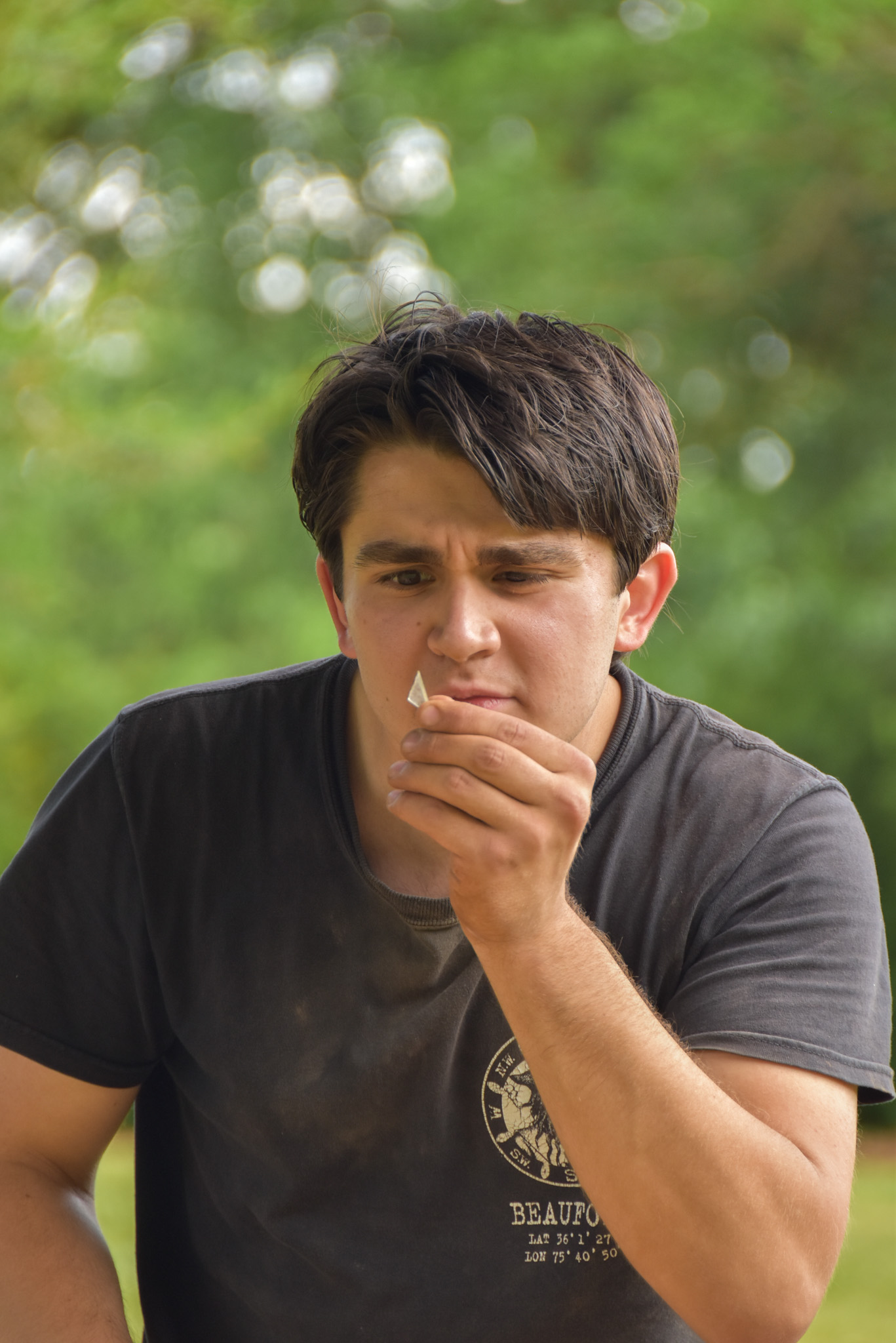
Cristiano Di Maro is a senior here at the college and will be graduating in May with a Major in History, Minor in Environmental Sciences, and Concentrations in both Public History and Archaeological Sciences. A man of many talents, he has also worked for four years with Student Engagement and has been an active voice on the radio station WRKE for the better half of his time here. I sat down with the man to talk archaeology, history, and reflect on his time here.
Q: What are some highlights of working in the archaeological program at the school?
“The archaeology program here is great, and so few people know about it, but it’s the things here at the college that are so small that often do some of the really interesting, important things. We get to do really hands-on things, and I get to do some really awesome research. I’m currently working with some pottery sherds excavated by Dr. Leslie Ann-Warden, our resident Egyptologist, in 2025 to identify what everything is temporally, or where in time they fall, which is really important to know who was where, when. For example, the pottery I’m working on is Ptolemaic, meaning it is Greek influenced, but made in Egypt, so it looks wildly different from Egyptian pottery before or after this period. If everything goes well, my research will go under review and be published!”
Q: What drew you to history as a whole? And what drew you to archaeology specifically?
“I’ve consistently enjoyed history as a hobby throughout middle and high school. I thought about ‘what is it I want to do with my life, what do I want to be excited about every day?’ And I thought about how I’ve always loved being outside and being active, the last thing I want is an office job, and archaeology was something that combined both of these worlds. I love being in the field and doing the research, the best of both worlds.”
Q: Stepping away from archaeology, do you have a fond memory you’d like to share?
“As we get into the colder months, I’m reminded of some of the wonderful snowball fights I’ve had. If Roanoke gets a good snowfall, you’ll find that the students here love a good snowball fight. I can vividly remember from my freshman year, next to Marion, having a brilliant skirmish with my friends, but also just some folks that we didn’t know! They just showed up and said, ‘Oh, snowball fight?’ And they joined. I even got my fair share against the Brackety-Ack EIC himself, Zack.”
Q: What are some of your hobbies and interests?
“I really enjoy photography; I’ve done a few different series on things like turkey-vultures and clouds. I also really love to travel; a big part of my personality is the idea of throwing a dart at a map and just going there. Just this past Fall break I travelled about 2000 miles to Vermont with a nice road trip.”
Q: How did you go about getting into WRKE?
“After completing the early action for the college before my freshman year, I saw an offering for radio and broadcasting, of which I have never done in my life. But I decided to do it anyway and got the position; it was one of the first big things I did on campus. I’ve done several radio shows now, but my first show was called “Adventure Time,” where I invited students or professors with international travel or living experience. I currently have an ongoing one with my partner where we talk about folklore and cryptids and monsters called “Cryptid Chronicles.” I even have one with a friend from the archaeology department where we have a “History Hour” talking about news out of the archaeological world.”
Q: What is your favorite aspect of history?
“My favorite aspect of history is the idea of different people developing the same or similar ideas despite never having interacted with each other. In the past, people would often say that there must’ve been some sort of communication or connection, but it’s actually a lot simpler than that; people have all over the world have a need and develop an intrinsic way of fulfilling that need, like pottery, for example. I love this commonality because it reminds us, no matter how different our cultures or how distant in time we are, that we are human, and we are all really just trying to make our way in the world.”
Q: What is your hope for the future of the history/archaeology program?
“Looking back at my time here, I’d have to say that the best part of working in these programs is the individualism and the ability to do independent research and work with professors. I’ll say, the History department here really does have some of the best professors, and if you really are passionate about something, just talk to one of them and they would certainly find a way for you to do it. I’d really like to see this characteristic hold on, but also, I’d love to see the persistence of the teamwork aspect of the program.”
In the brief time I’ve gotten to know Cristiano, he has proved to be a wonderful person with a deep love of his passions. I hope to see him thrive as a historian and archaeologist, as he completes his final chapter of his time here at Roanoke.
“Lastly, I would like to thank everyone who has gotten me this far. College is often marketed as this experience where you go through a lot of things and you change, but you can’t do that without interacting with so many people. I’d like to thank Dr. Warden from archaeology, and all the history professors I’ve had. I’d also like to thank my friends, my family, my girlfriend; they’ve all really allowed me to flourish in the way that I have.”