Written by Zachary Bayers, Editor-in-Chief
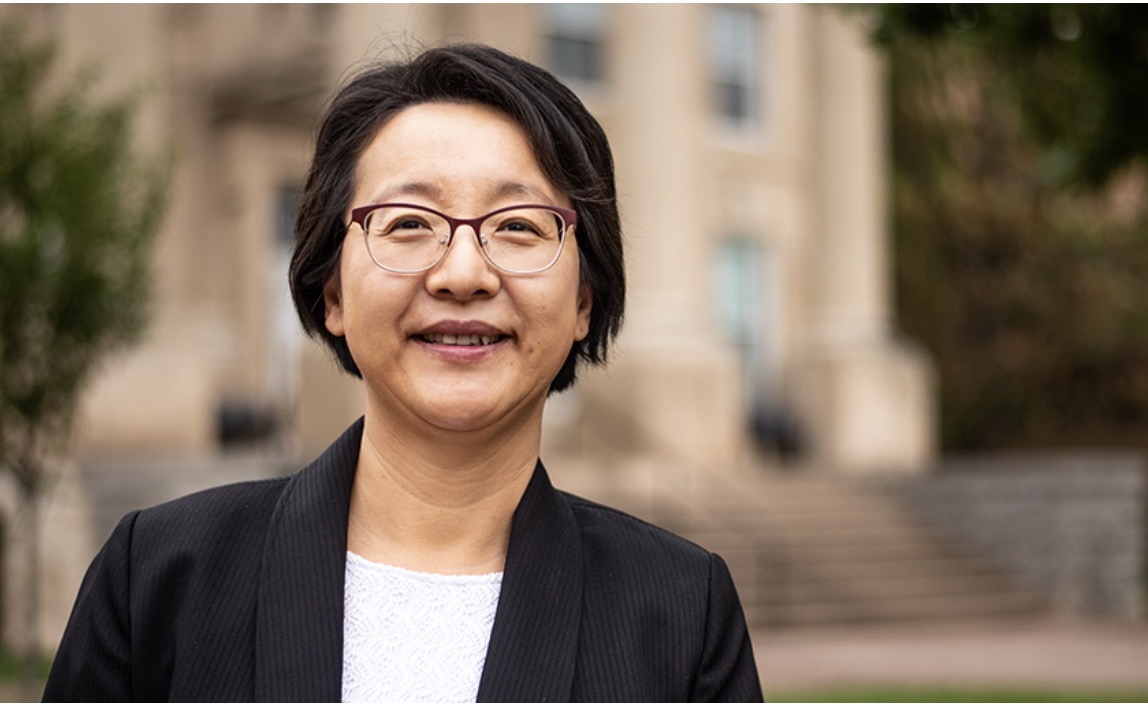
Dr. Stella Xu has been a notable history professor within her time at Roanoke College, recently celebrating her 20th year teaching here at the school since 2006. Throughout, she has consistently pushed for students to receive national scholarships, especially for study abroad programs within East Asia. Over the past 15 years, Roanoke College students received 39 national scholarships related to East Asian studies, which is a larger portion of the college total yield; and for Dr. Xu, it was a priority of hers to help students at ‘Noke realize their talented potential to receive such competitive scholarships to continue their studies — most of which were successful! She was especially proud of our college’s students to be driven enough to obtain such scholarships and opportunities.
Q: What are your favorite classes/courses to teach, and why?
Dr. Xu: “Taking students abroad has to be my favorite. I’ve taken students to Japan, Korea, and China multiple times, and I really enjoy that! I think what students can learn in-class by reading is totally different from going out and talking to real people and seeing things with their own eyes. Even for my May term classes, you probably do not remember one book we read or one chapter; however, ten years later you might remember practicing calligraphy and enjoying a tea ceremony. Those are the experiences I want students to remember and enjoy the most years later.”
Q: How did you fall in love with history?
Dr. Xu: “Believe it or not, I was a science kid! My undergraduate major was actually science, but I always loved history. However, before I majored in history, it was more of a hobby. When I finally decided to make the switch, I admit that I had a little bit of a dilemma. Now that history was going to be my profession and I needed to make a living out of it, it presented a much bigger anxiety in comparison to simply reading and loving history beforehand. But, I am so glad I changed my major and followed my love. There were times where I felt as though I didn’t know where I was going, or if I would even land a job within history; but in the end I’m glad everything worked out! Twenty years later, I love my job, I love teaching students, and I love to take students abroad!”
This past year, Dr. Stella Xu was also responsible for helping with the installation and curation of the Kim Kyusik (/ˈkjuːsɪk/ 김규식 ) Center for Korean Studies within the Bank building. For those who aren’t aware, Kim Kyusik was an impactful Korean politician who served as their Vice President of the Provisional Government of the Republic of Korea from 1944 to 1945. However, Kyusik also received his bachelor of arts right here at Roanoke College from 1897 until his graduation in 1903, trailblazing as one of the first Korean students to study within the United States.
Q: When did you first begin the curation process for the Kim Kyusik Center, and what inspired you to help create it in the first place?
Dr. Xu: “When I first came into Roanoke, I vaguely heard about Kim Kyusik, but lacked much knowledge about him back then. However, through my own studies, there were several things that really impressed me. As a small liberal arts college, it amazed me that roughly 130 years ago, our institution was that open-minded when offering their education. While yes, colleges commonly accepted students, Roanoke seemed to make it a mission to actively recruit them. This made a huge difference in comparison to other colleges, where although they accepted maybe one or two Korean students, Roanoke College would visit the Korean legation in Washington, D.C. and express their interest in inviting ambitious young people to their institution. I just couldn’t believe that such a small college had such a long history and connection, especially with such pure good will! In relation to Kim Kyusik, what I really admired about him was how kind-hearted of a person he was.
Growing up as an orphan, Kim Kyusik first arrived here when he was only 16 years old. However, during his life here, Kyusik wasn’t content with being just a college student, he really wanted to be a member of the community as well. There were cultural and language barriers, but he was not only able to overcome all of those, Kyusik and our community also accepted him as a valued member. It was a mutual effort! That was very touching and impressive to me, and inspired me to learn more about him and his relationship with Roanoke College.”
Q: Are there any favorite fun or notable facts you learned while researching Kim Kyusik?
Dr. Xu: “We, at the college, actually lost Kyusik’s transcript for a long time! The last time a researcher saw his transcript was in the 1970s. Then, for the next 40 or so years, it was somehow misplaced, and a rumor occurred where many believed the transcript was lost to a flood back in the 70s. Five or six years ago, our archivist by accident found Kim Kyusik’s transcript. From there, we were able to see what he learned at Roanoke College, and how those classes prepared him to be a successful diplomat and state representative. These skills enabled him to speak confidently at the Paris 1919 peace conference, something that wasn’t easy to do as a young person. By having a liberal arts education, he was able to study a variety of different subjects such as French, German, and Latin. Mastering those languages enabled him to be a better diplomat when he was speaking to an international audience back in France.”
Dr. Stella Xu’s research and phenomenal contributions granted her a special visitation to South Korea, for she was personally invited by the South Korean government itself to celebrate her accomplishments. Here’s what she had to say about her trip:
Q: What can you tell us about your experience in South Korea?
Dr. Xu: “I was invited for a six-day stay, and they covered all of my expenses, including travel, a hotel, food and so on! There were some major events mixed in, one of which I got to give a big talk to a larger audience about Kim Kyusik and the Kim Kyusik Center. The last event was the national celebration, where I got to be seated near the South Korean president, Lee Jae Myung. I even got to be on national TV! Despite my experience studying abroad many times in countries including South Korea, this was a very memorable trip even for me. I loved the food there, too!”
Q: What do you hope students take away from this memorial? How does this highlight the importance of history?
Dr. Xu: “Something I recently discovered is that out of all the universities in the state of Virginia, Roanoke College is one of two educational institutions that has a center for Korean studies — the other being George Mason University. Not even UVA or VCU have one. Even then, ours is more special as a small liberal arts college. I’d argue that out of the whole United States, no college has such a profound and meaningful connection with Korea from 130 years ago than ours.
With this, I want our center to be a hub and a bridge to reconnect Korea and the United States’s history; additionally, even more so a hub for our students. I want it to be a research center, to see more academic exchanges between students, and to see more cultural events that can invite both students and local communities. Learning about Kim Kyusik’s story, I hope our students at Roanoke can relate to his journey as a young person striving for a quality education and take inspiration from his love of learning.”
From both Dr. Xu’s passionate desire for history and Kim Kyusik’s quest for knowledge, it’s evident that a desire to learn transcends international barriers and allows us to come together as an educational community. Please be sure to check out the Kim Kyusik Center at the Bank building, and continue to build the bridges Dr. Xu has advocated for amongst your fellow scholars!