Written by Iliana Martinez, Staff Reporter
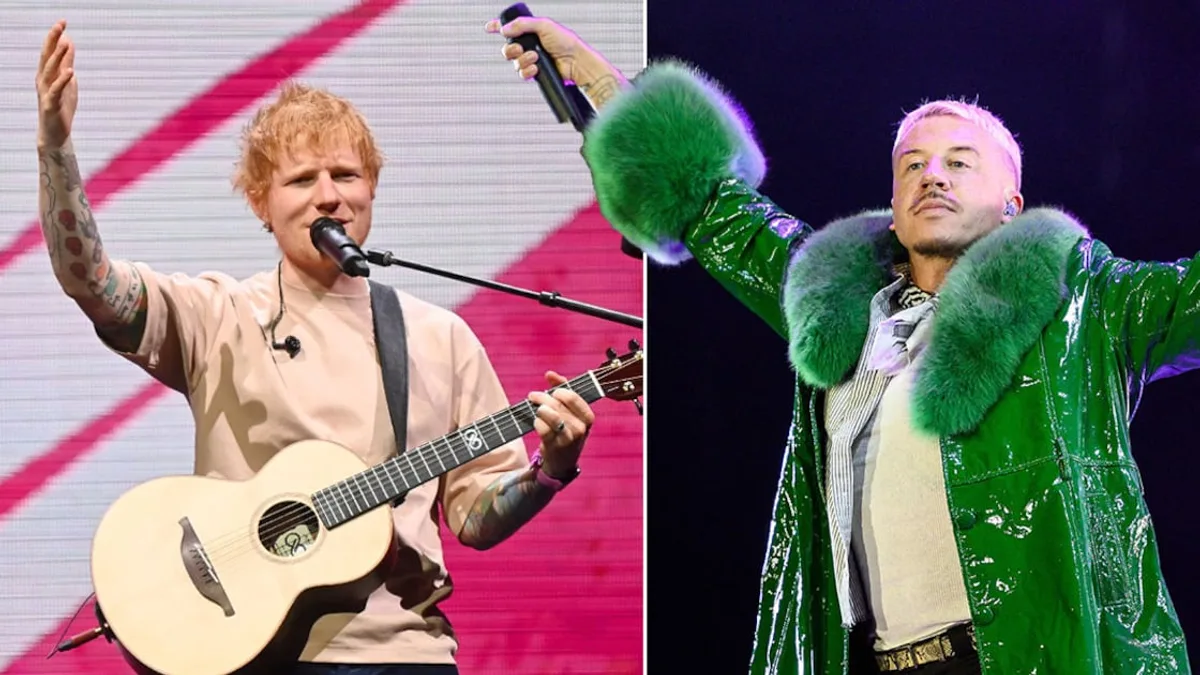
A couple weeks ago, Ed Sheeran made a statement during his show in Philadelphia that he wanted his shows to be about “music and unity, and not politics.” This, of course, was said after the removal of Macklemore from Sheeran’s Loop Tour due to the former making a “Free Palestine” statement before a song on the subject matter. Watching the video of Sheeran saying that his concerts weren’t political and only focused on love and community, I had to laugh. Music is political. His job is political.
In the sense of a concert, there are a lot of politics and social aspects involved. Ticket prices are skyrocketing and are only accessible to those who can afford them. If you are able to get tickets, the concerts may require traveling and taking time off, which may not be feasible. Concerts, especially those in stadiums, may also be difficult for those with medical issues to attend.
Focusing on music as an art form, it must be known that art is political. It’s a form of expression and inspiration and is often the first thing to be attacked under repressive governments and authoritarian regimes. Music has historically been used as a form of rebellion and resistance– think of the growth of jazz during the 1960s and punk rock’s anti-establishment lyricism from the 1970s. Music both responds to the culture and influences it in a new direction. Within Gen Z, Lady Gaga stands out as both a comeback to homophobic behavior as we veered closer to legalizing gay marriage, but also as a messenger of equality to the masses.
So, art is political and music is political. What about the artist? If the product is political, then the artist should be too, right? There are some artists like Sheeran that believe their music is separate from the world outside the concert venue, whereas Olivia Rodrigo has not only written explicitly about womanhood (“all-american b*tch”, “serena joy”), and also recently organized a festival centered around supporting women’s rights and access to healthcare.
Artists can’t be separate from the work they’ve created nor the politics surrounding the title of being an artist. Furthermore, we have promoted these people, for better or for worse, to leaders of society. We look to them for inspiration, hope, and change in hard times. They are staples in the public sphere. When we see people like Olivia Rodrigo advocating for women’s rights and Dolly Parton’s open acceptance of the queer community during the AIDs epidemic and onwards it encourages others to do the same and to start their own path of activism. When artists are outspoken, it’s not only encouraging but also allows others to see themselves in someone or to feel seen.
Artists who understand and accept their role can do great things. This is not to say that being a famous musician is always sunshine and rainbows. However, you cannot deny that the job comes with an attachment to politics and society as a whole. Asking if artists should be political ignores the truth; It comes with the job.